

User Acceptance Testing (UAT) in Jira
Validate that the software meets business requirements with stakeholder-driven testing
User Acceptance Testing is the final quality gate before release. BesTest gives your team the tools to plan, execute, and track UAT management inside Jira - so stakeholders can validate requirements and sign off without leaving the tools they already know.
Try BesTest FreeThe Challenge
UAT involves non-technical stakeholders who need simple, clear tooling. Common pain points:
- •Business users find technical test management interfaces intimidating, leading to low participation
- •Translating acceptance criteria into clear test steps that non-technical users can follow independently
- •Managing vague UAT feedback like "this does not feel right" instead of structured defect reports
- •Communicating UAT status to project management in business terms, not test metrics
How BesTest Helps
BesTest makes UAT manageable inside Jira. Business users execute test cases without learning a new tool.
Business-Friendly Test Cases
Write test cases in plain language with rich formatting, annotated screenshots, and clear step-by-step instructions that any stakeholder can follow.
Requirements Traceability
Link every UAT test case to its business requirement. See which requirements are validated and which still need testing.
Test Case Review
Get stakeholder approval on test cases before execution begins using BesTest's built-in review workflow.
Clear Reporting
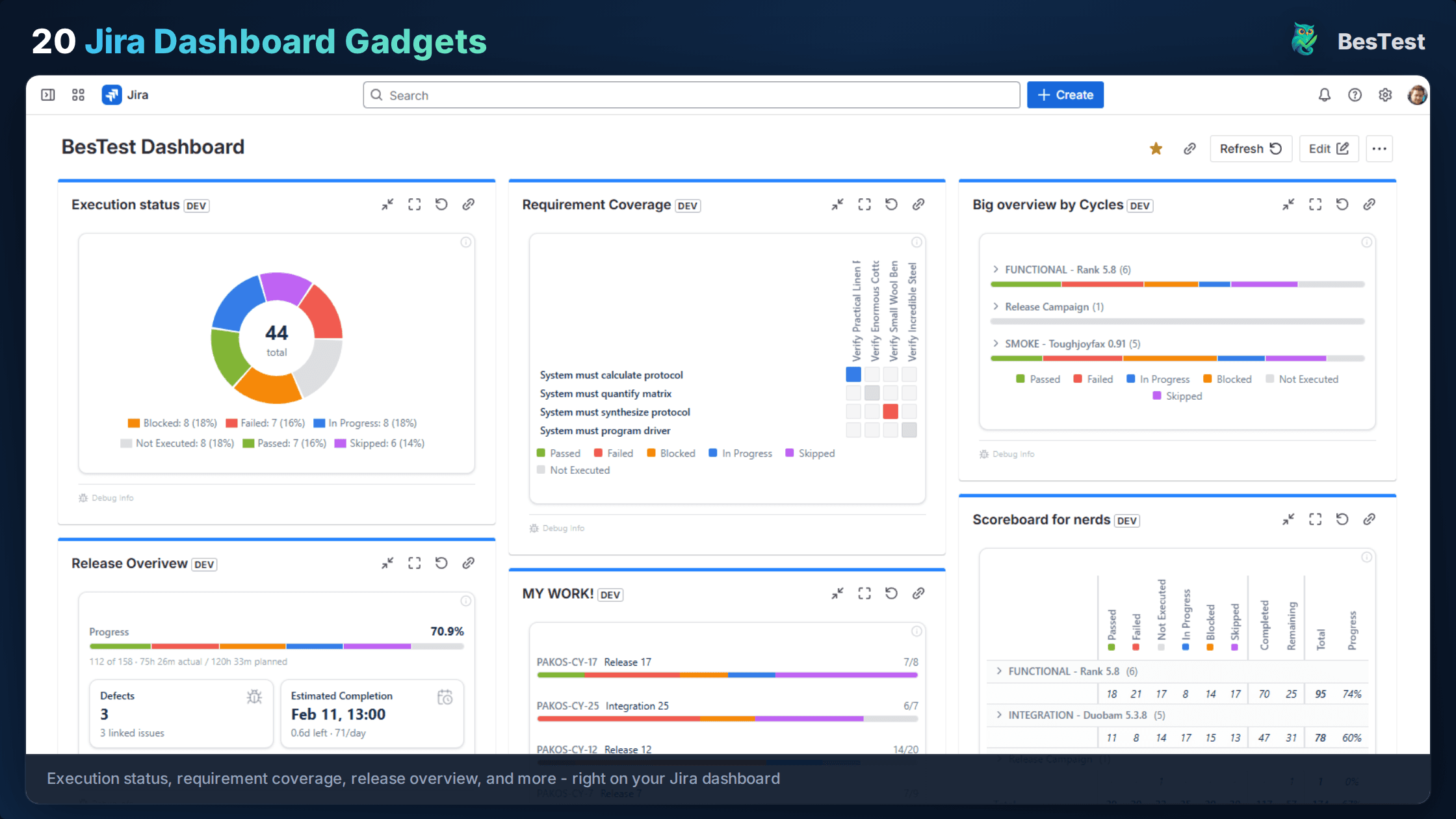
Dashboard shows which business requirements are validated, pending, or have issues - in language stakeholders understand.
Defect Logging
One-click bug creation from failed tests. BesTest pre-populates defects with test steps, expected results, and actual behavior.
Sign-Off Tracking
Track formal stakeholder approval at the requirement level with timestamps, comments, and audit-ready documentation.
UAT Cycle Management
Group tests into focused UAT cycles, assign to stakeholders, and track completion progress in real time.

Free for teams up to 10 users. Installs in under a minute.
Get StartedKey Benefits
How to Implement
Define Acceptance Criteria
Document what "done" looks like for each requirement in BesTest. Work with stakeholders to capture the business scenarios that matter.
Create UAT Test Cases
Write test cases in business language and link each one to its requirement. Use BesTest's rich formatting to add screenshots and clear instructions.
Review with Stakeholders
Submit test cases for review using BesTest's workflow. Stakeholders approve that the tests match their expectations before execution starts.
Execute UAT Cycle
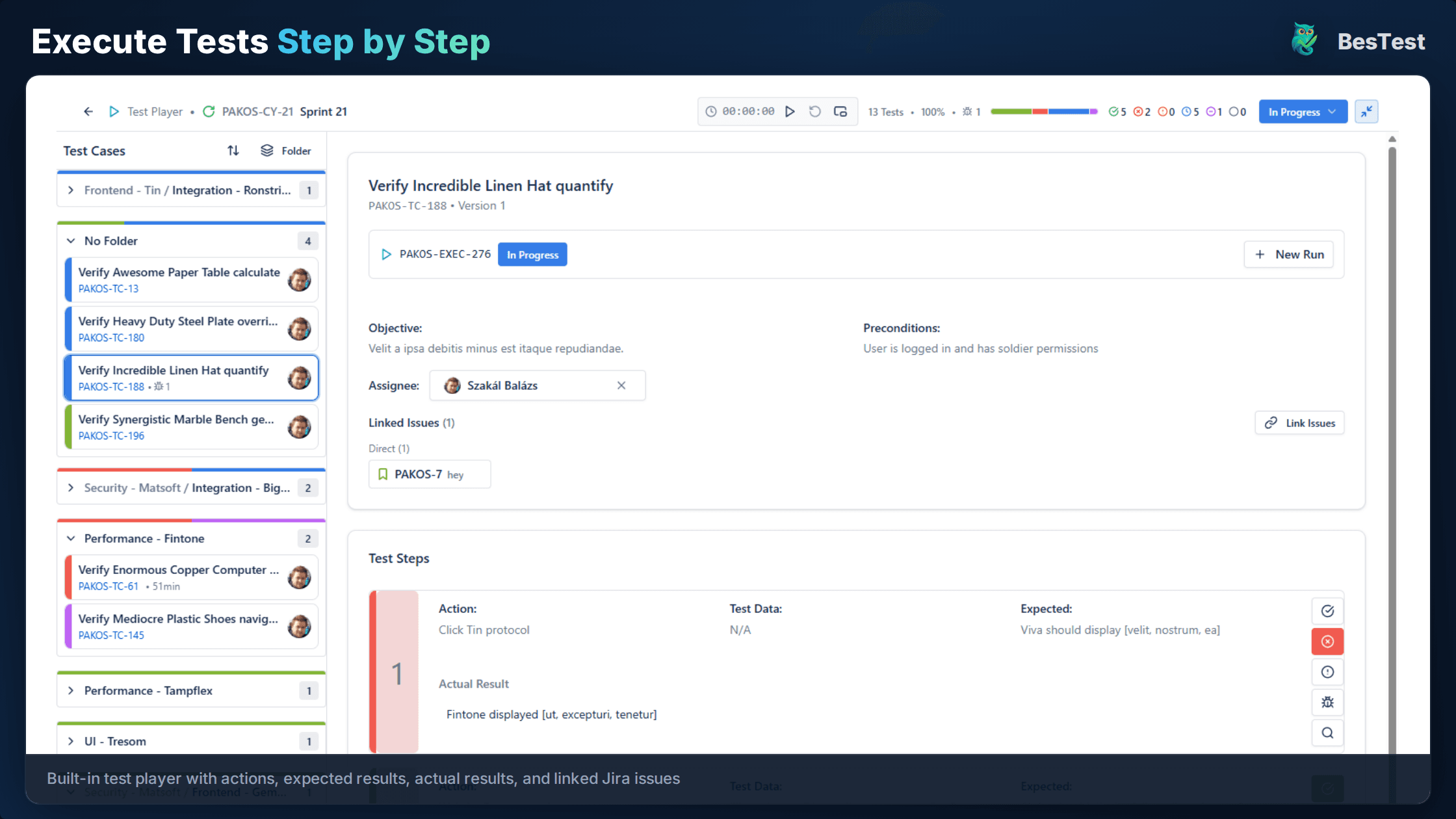
Create a UAT cycle, assign test cases to business users, and monitor progress on the dashboard. Testers record results step by step.
Collect Sign-off
Document stakeholder sign-off at the requirement level. Generate a UAT completion report for release approval and compliance records.
Best Practices
- •Involve stakeholders in test case review before execution, not just after
- •Use non-technical language in every test step - if it needs explanation, rewrite it
- •Schedule dedicated UAT sessions rather than expecting ad-hoc testing
- •Treat UAT defects as high priority - they represent real business needs not being met
- •Document sign-off formally for audit purposes, even in non-regulated environments
Ready to Improve Your User Acceptance Testing (UAT)?
Start running User Acceptance Testing (UAT) cycles in Jira today. Free for up to 10 users.
Try BesTest FreeRelated Use Cases
Related Guides & Definitions
UAT in Jira: How to Run User Acceptance Testing the Right Way
User Acceptance Testing (UAT) is the final quality gate before release, but running UAT in Jira is notoriously painful without the right setup. This guide walks you through everything - from planning UAT cycles and writing business-friendly test cases to tracking stakeholder sign-off and reporting results. Learn how to turn Jira into a UAT powerhouse.
User Acceptance Testing (UAT)
Testing performed by end users or stakeholders to verify the software meets business requirements.
Acceptance Criteria
The specific conditions a feature or user story must meet to be accepted by stakeholders.