Sprint Testing in Jira

Integrate testing into your agile sprints with test cycles tied to sprint stories

Sprint testing ensures that user stories delivered in each sprint are properly verified. Think about the typical mid-sprint scenario: developers are merging pull requests daily, the product owner is refining stories for next sprint, and your testers are juggling test creation for new stories while trying to verify the features that were completed yesterday. Without tight integration between your test management and sprint workflow, testing becomes an afterthought that gets squeezed into the last two days of the sprint. BesTest helps you align test management with agile sprints in Jira so that testing is woven into the fabric of the sprint rather than bolted on at the end.

The Challenge

Testing within agile sprints has unique pressures that traditional test management approaches were not designed to handle. The iterative nature of agile means that tests need to be created, reviewed, executed, and analyzed within a two-week window, often while requirements are still being clarified. Teams that treat testing as a separate phase after development find themselves perpetually behind, carrying test debt from one sprint to the next. The most common friction points include:

  • Limited time for test creation and execution within the sprint timebox, especially when stories are not marked as "ready for testing" until the final days of the sprint.
  • Tests are needed as stories are developed, but testers often cannot start writing detailed test cases until the feature is stable enough to verify, creating a chicken-and-egg problem.
  • Tracking which stories are tested vs. not becomes difficult when tests live in a separate system from the stories, forcing testers to manually cross-reference two sources of truth.
  • Balancing new feature tests with targeted regression testing for areas affected by the sprint's changes, without letting the regression scope balloon out of control.
  • Reporting sprint testing status at stand-ups in a way that is meaningful to developers and the product owner, not just a list of numbers that QA finds useful.
  • Handling stories that are descoped or significantly changed mid-sprint, which invalidates test cases that were already written and potentially already reviewed.
  • Ensuring that test coverage is visible at the story level so the product owner can make informed decisions about which stories are truly "done" and which are still at risk.
  • Preventing the "testing sprint" anti-pattern where the team informally adds an extra sprint of testing after each development sprint, negating the agility they were trying to achieve.

How BesTest Helps

BesTest aligns naturally with Jira sprints for seamless agile testing. Because test cases are Jira entities linked directly to stories, testing is visible within the same board and backlog that the development team uses every day. This tight coupling means that when a developer moves a story to "Ready for QA," the linked tests are immediately accessible and the tester can start execution without switching tools or searching through a separate repository.

Story-Linked Tests

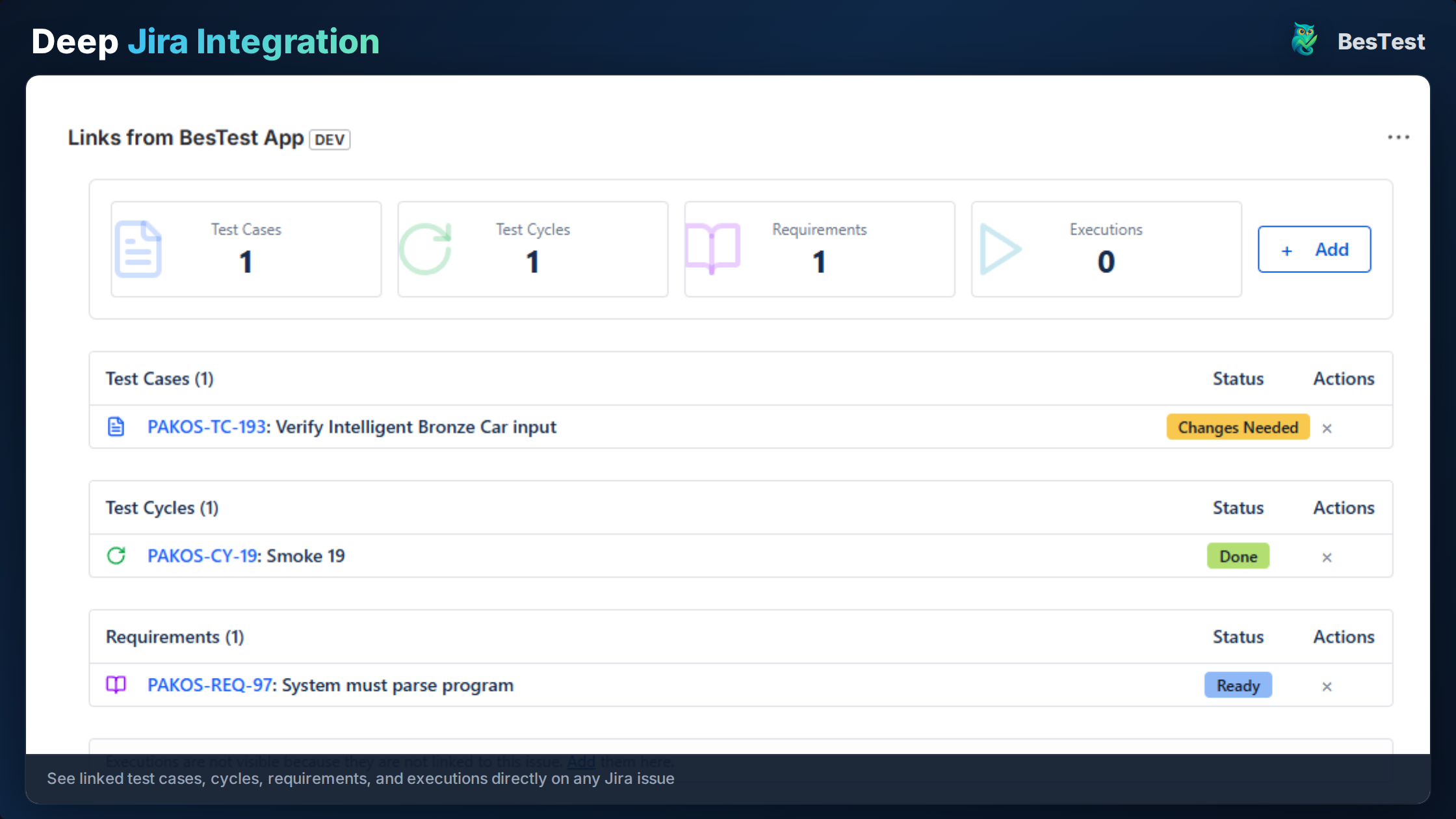
Link test cases directly to user stories, and see the test execution status on the story itself. This means during stand-up, the team can look at the board and immediately see which stories have green test status and which still need verification. Developers get direct feedback on their stories without needing to ask QA for a status update.

Sprint Collections

Create Smart Collections that automatically include tests linked to current sprint stories. As stories move in and out of the sprint during planning, the collection updates in real time. This eliminates the manual step of curating a test cycle for each sprint and ensures that no story's tests are accidentally omitted.

Real-Time Progress

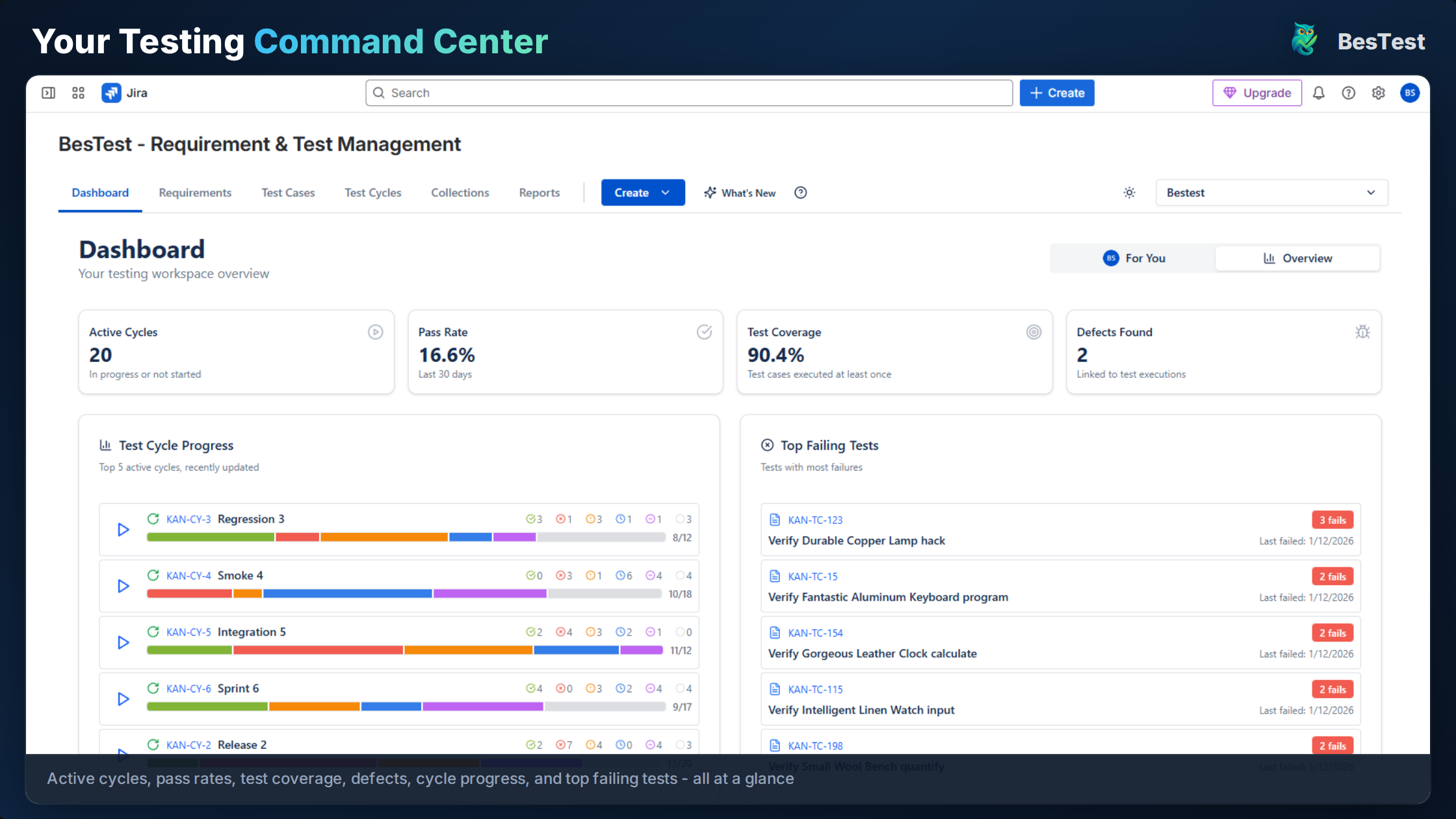
The dashboard shows testing progress for the sprint, broken down by story, tester, and test status. Report at stand-ups with confidence because the data is live, not a snapshot from last night's email. Team members can drill into any story to see which specific tests are passing, failing, or not yet executed.

Requirements Coverage

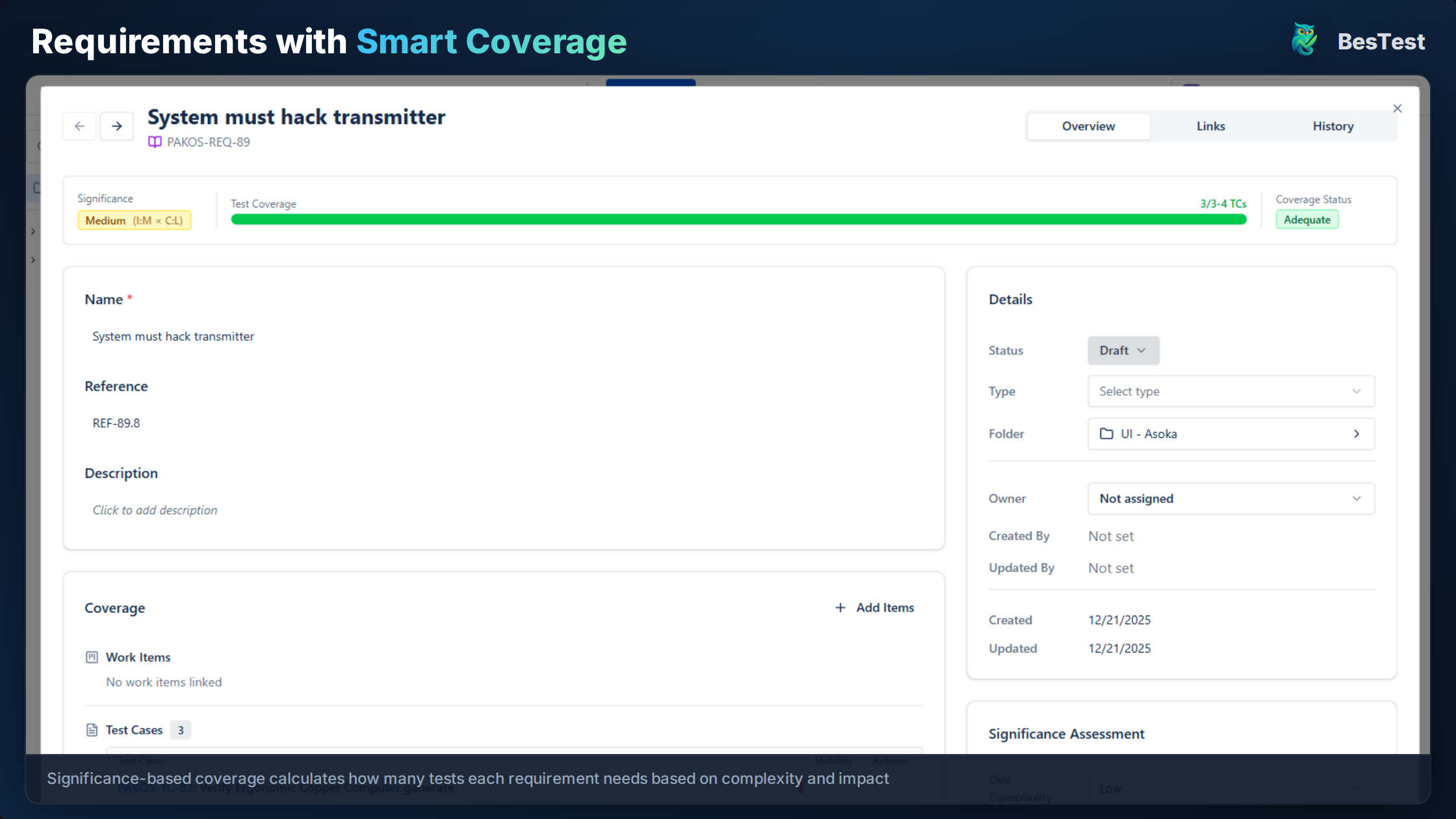
Link requirements to stories and tests to build a complete traceability chain. This lets you answer questions like "has every acceptance criterion for this story been validated?" and "which requirements delivered this sprint have full test coverage?" at any point during the sprint without manual analysis.

Quick Test Creation

The familiar Jira-native interface lets testers create tests as fast as developers write code. With reusable test steps, templates, and the ability to clone and modify existing tests, testers can keep pace with development velocity instead of falling behind. The low friction of test creation encourages testers to document edge cases and exploratory findings as proper test cases.

Sprint Metrics

Track sprint-specific testing metrics like test creation rate, execution velocity, defect discovery rate, and coverage percentage. These metrics help the team calibrate how much testing capacity is needed per sprint point and identify when sprints are consistently over-committed on scope relative to testing capacity.

Sprint Testing in Jira in BesTest
BesTest in action: Sprint Testing in Jira

Key Benefits

Automatic sprint test collections via story linking mean the test cycle is always in sync with the sprint scope, even when stories are added or removed during the sprint.
Test status visible on user stories keeps the entire team informed without requiring separate QA status reports or stand-up updates.
Sprint-level coverage and progress metrics give the product owner data-driven confidence about whether the sprint is on track to meet the definition of done.
Fast test creation in the Jira-native interface means testers can keep pace with development rather than accumulating a backlog of untested stories.
Clear reporting for agile ceremonies, including sprint review and retrospective, with data that speaks to both technical and business audiences.
Reduced context switching because testers work within the same Jira environment as the rest of the team, eliminating the need to maintain separate test management tools.
Story-level traceability makes sprint retrospectives more productive because the team can see exactly where testing bottlenecks occurred and adjust their process accordingly.
Historical sprint testing data helps with capacity planning, showing how many test cases and cycles the team can realistically handle per sprint point.
Built-in defect linking from test executions to stories creates a clear picture of quality for each user story, not just for the sprint as a whole.

How to Implement

1

Plan Testing in Refinement

During backlog refinement, identify testing needs for each story and create high-level test scenarios. This early involvement ensures that stories include adequate time for testing in their estimates. It also surfaces testability concerns before the story enters the sprint, such as missing acceptance criteria, dependencies on external systems, or the need for specific test data.

2

Create Tests with Stories

As stories enter the sprint, create and link test cases. Use the review workflow to ensure quality and completeness before execution begins. Ideally, test cases for a story should be created as soon as the story is picked up by a developer, not after the feature is complete. This parallel workflow allows testers to contribute to sprint velocity from day one rather than waiting for handoffs.

3

Execute During Sprint

Execute tests as features are completed. Do not wait until sprint end to start testing; test continuously throughout the sprint. When a developer marks a story as ready for QA, execute the linked tests immediately. Early feedback loops give developers time to fix defects within the sprint rather than carrying them over as technical debt. This continuous approach also distributes testing effort evenly across the sprint.

4

Track and Report

Use the dashboard to track sprint testing progress and report status at daily stand-ups. The visual breakdown by story makes it easy to identify which areas need attention. If testing is falling behind development, the data helps the team decide whether to bring in additional testing capacity, reduce sprint scope, or extend testing into the buffer period.

5

Sprint Retrospective

Review testing metrics in the retrospective, including defect discovery rate, test creation velocity, and the ratio of tested vs. untested stories at sprint end. Identify improvements for the next sprint, such as starting test creation earlier, automating repetitive tests, or adjusting the team's definition of done to include specific testing criteria.
Best Practices

  • Create test cases during sprint planning, not after. Waiting until a feature is complete to start writing tests guarantees that testing will be squeezed at the end of the sprint.
  • Test features as they are completed, not all at sprint end. Continuous testing throughout the sprint catches defects when they are cheapest to fix and prevents a last-day testing crunch.
  • Include testing in story acceptance criteria so that a story is not considered "done" until its linked tests have passed. This aligns the whole team around quality as a shared responsibility.
  • Balance new feature tests with targeted regression for areas affected by the sprint's changes. Use Smart Collections to automatically include relevant regression tests based on the modules being modified.
  • Track sprint velocity including testing effort to get a realistic picture of team capacity. If testing is consistently underestimated, sprints will consistently miss their commitments.
  • Pair testers with developers during refinement sessions so that testing perspectives are incorporated into story design, not just story verification.
  • Maintain a sprint testing template that standardizes the cycle setup, so testers do not spend the first day of each sprint on administrative overhead.
  • Review untested stories at the end of each sprint to understand why they were missed. Is it a capacity issue, a dependency issue, or a process issue? Each cause requires a different solution.
  • Celebrate sprint zero-defect milestones to reinforce the value of embedded testing and motivate the team to maintain high-quality standards.

Ready to Improve Your Sprint Testing?

BesTest provides all the tools you need—requirements traceability, smart collections, review workflows, and a Jira-native experience. Free for up to 10 users.

Try BesTest Free